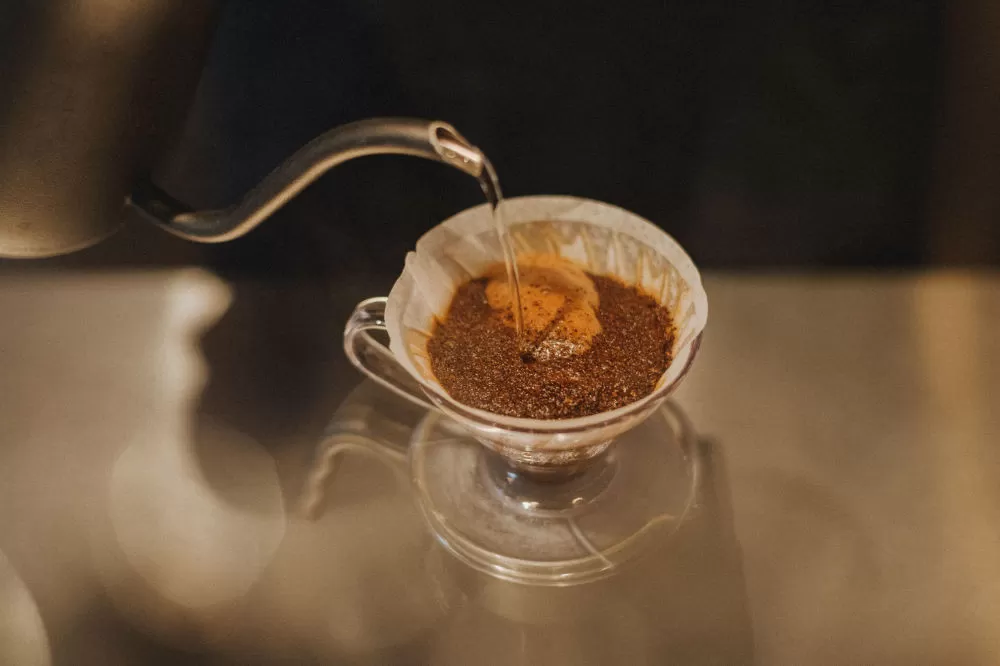
Pour over rewards attention rather than force. Every variable is in plain sight, which makes it the best method for learning what a coffee actually tastes like. What follows is where we start, offered as a beginning rather than a rule.
What you need
- 15g of coffee, ground medium-fine
- 250g of water at 94°C
- A rinsed paper filter and a warmed cup
- A scale and a timer
The method
- Rinse the filter with hot water, then pour the rinse water away.
- Add the coffee and tap the cone so the bed sits level.
- Start the timer and pour 45g of water in a slow spiral. Wait thirty seconds.
- Pour steadily to 150g, keeping the water off the paper.
- Pour to 250g by one minute forty-five.
- Let it draw down. The bed should be dry between two and a half and three minutes.
Reading the bed
When it finishes, look at what is left behind. A flat, even bed means the water moved through the whole of the coffee. Grounds stranded high on the walls mean the pour was too wide; a deep well in the middle means it was too narrow and too fast.
Adjusting
If the brew finishes early and tastes sharp or hollow, grind finer. If it stalls past three and a half minutes and tastes dry, grind coarser. Hold the ratio steady while you do it, so you are only ever testing one thing.
Water
Water with some mineral content in it makes more difference here than in any other method. Distilled water brews flat coffee, and heavily softened water brews dull coffee. Filtered tap water is usually the right answer.