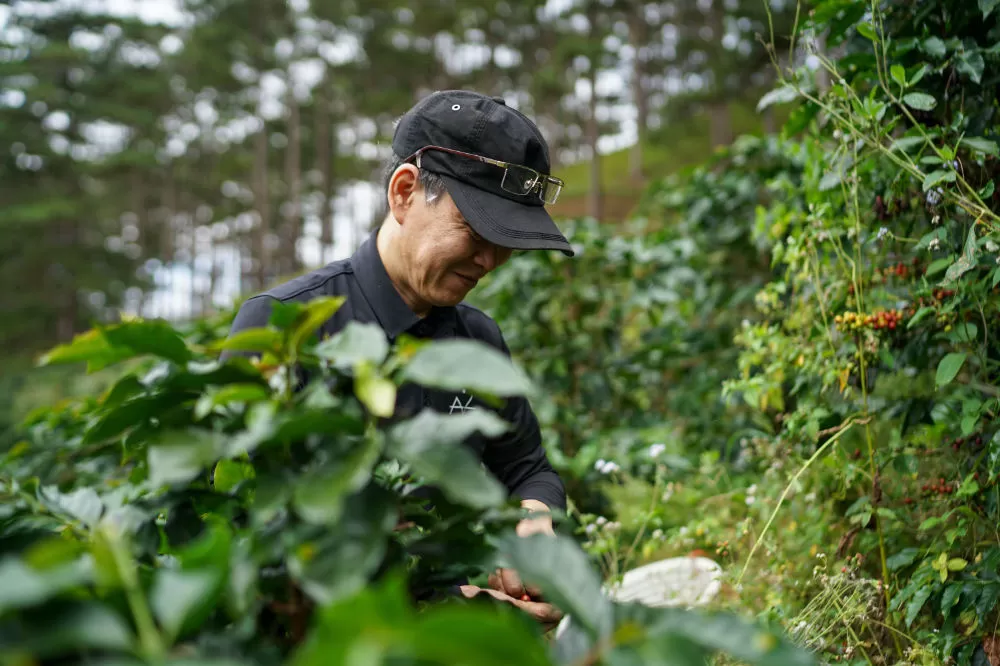
Direct trade is not a certification. Nobody audits it and nobody can revoke it, so the term is worth exactly as much as the detail a company is willing to put behind it. Here is ours.
What we mean by it
It comes down to one commitment: we buy from the farm or the growers' group that produced the coffee, rather than from a pooled market lot. We know whose trees these are.
Buying the same lot again
We buy the same coffees from the same farms year after year rather than shopping each harvest for whatever cups best. That is a real constraint on us: some years a familiar lot is not the most exciting thing on the table.
It is still the right trade. A grower who knows the buyer will return can plant, prune and replace trees on a five-year view instead of a five-month one. Spot buying quietly pushes every farm toward whatever sells fastest, and on this scale that is a slow kind of harm.
Local agriculture
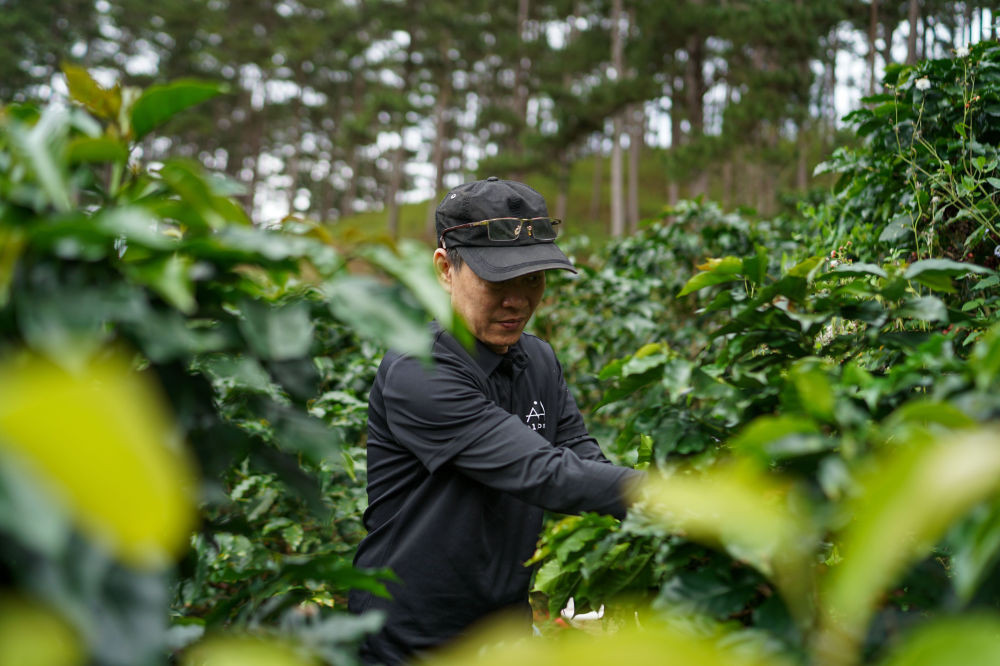
Most of what we buy is grown within a day's drive of where we roast. That is not a marketing position, it is a set of practical advantages: we can visit during picking rather than after it, we can cup a lot while there is still time to change how it is dried, and the coffee reaches the roastery without a container crossing an ocean.
It also means the money stays in the highland provinces that grew it. Coffee here competes for land with vegetables that pay weekly, and a farm only keeps its coffee trees if the coffee is worth keeping. That calculation, repeated across a district, is what decides whether Philippine arabica exists in ten years.
What it does not fix
Paying more for a good lot does nothing for the grower whose harvest was ruined by rain, and a fair price is no protection against a typhoon or a season of leaf rust. Direct trade is a better way of buying coffee. It is not a development programme and it should not be described as one.
We also buy from further afield — Ecuador, Brazil, Costa Rica, Colombia — through importers who work the same way, because we cannot verify those farms ourselves as closely and would rather say so than imply otherwise.
The coffees this shows up in most directly are Apo Sandawa, bought from JL Dela Cerna in Bansalan, and Lourdes from Lourdes Aligo in Sagada. More on why we buy where we do in our note on choosing Philippine coffee.